
By Glenn H. Ivers
The American Cemetery just outside of Margraten in the Netherlands is the final resting place of 8,291 of our boys who went off to World War II and never made it home. An additional 1,722 who went missing and were never found are memorialized as well. These words are inscribed on the 100-foot tower there:
“Each for his own memorial, earned praise that will never die, and with it the greatest of all sepulchers, not that which his mortal bones are laid, but a home in the minds of men.”

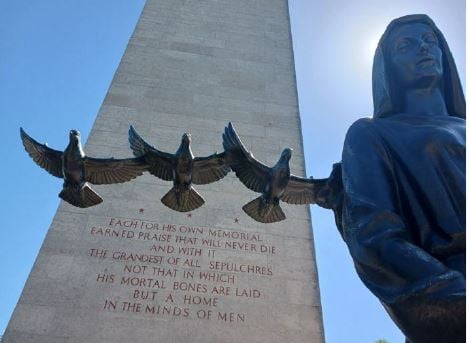
Walking among acres of crosses and Stars of David in American cemeteries across Europe is an indelible and deeply personal experience. Yet it is our collective memories of the courage and sacrifices of heroes that must never die and must be handed down from generation to generation. In a noisy world, we’ll teach young people best when we model our convictions by taking:
“Increased devotion to that cause for which they gave the last full measure of devotion, that we here highly resolve that these dead shall not have died in vain.”
Gettysburg Address, Abraham Lincoln
Gettysburg and Bastogne
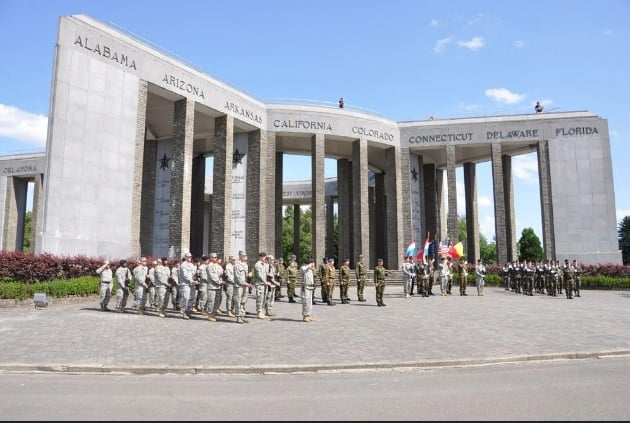
When I was very young, our family made a memorable trip from Syracuse to Gettysburg. It was the first of my four visits, the most recent being early October of this year. My purpose this time was to support and help to animate a brainstorm of Gettysburg-based historian and author Leon Reed, one of our nation’s foremost Civil War and the Battle of the Bulge scholars. In his capacity as president of the Dwight D. Eisenhower Chapter of the Battle of the Bulge Association, he proposed a partnership between Gettysburg and Bastogne, sites of arguably the two most consequential battles the American army ever fought. Each battle was critical in turning back the forces of evil in the form of the rebellion by slave-holding states on the one hand, and a murderous, fascist Nazi regime bent on world domination on the other.
Union army patriots suffered more than 23,000 casualties in the Gettysburg battle, while American casualties during the Battle of the Bulge exceeded 80,000. Memorials and statues abound in both locations, including the massive Battle of the Bulge Memorial outside of Bastogne on Mardasson Hill. But it is when one is walking in the fields and hills of both battlefields where so many young men fell that one can almost conjure the sights, sounds and smells of pitched battle.
The Partnership
Leon envisions connections between the municipalities, schools, museums, civic organizations and other entities in Gettysburg and Bastogne. Anne-France Jamart, Consul General of Belgium in New York wrote this of the importance of building common cause between the two historic towns:
“Though separated by time, geography, and circumstance, they are linked by a common story: the defense of freedom, the resilience of democratic societies, and the extraordinary courage of ordinary citizens called upon to face extraordinary challenges.”
As one of the earliest responses to Leon’s initiative, Mathieu Billa, director of the Bastogne War Museum, met with Loni Buck, chair of the World War II Experience Museum in Gettysburg after he participated in a Fireside Chat with Tim Gray of the World War II Foundation at the Belgian consulate in New York City. The purpose of the Fireside Chat was to “inspire the next generation of World War II storytellers.” Echoing the focus of the Fireside Chat, Bastogne Rotarian Joris Dequae expressed a particular interest in linking schools:
“A student-centered pilot project would be an excellent way to launch the coalition with energy and purpose. Encouraging exchanges between young people in Gettysburg and Bastogne would give concrete meaning to the values we all wish to preserve.”
All involved in the nascent Partnership agree that our youth are critical to the perpetuation of remembrance. Thus, it was the presentation that Leon and I made at Gettysburg High School that may prove to have the greatest long-term impact. Under the steady, guiding hand of principal Jeremy Lusk, nearly 200 students learned about Bastogne.
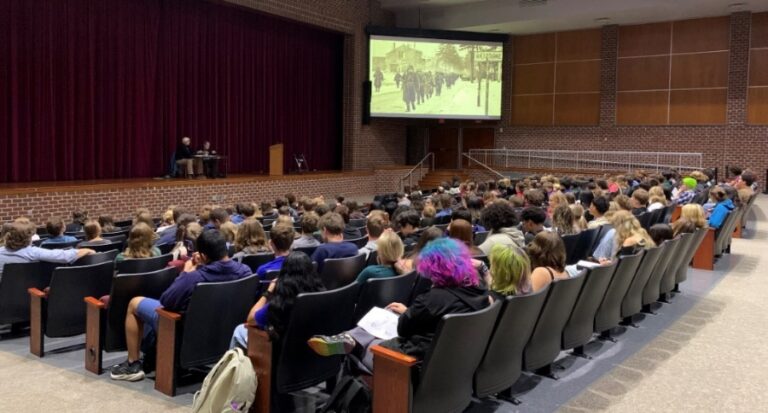
Leon explained the history of the battle, including the role of the 28th Infantry Division (the Pennsylvania National Guard). I read excerpts from my book Angels of Bastogne which Susan Eisenhower lauded for “reminding us of the human impact of war.”
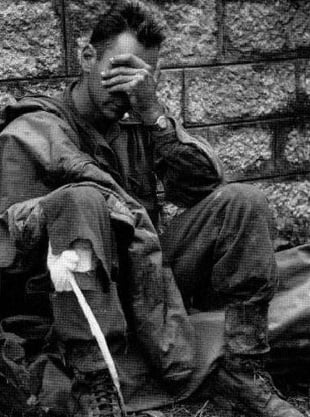
My book tells the true story of an American army doctor and two volunteer Belgian nurses who went through hell together to save American lives. Tragically, one of the nurses, Renee Lemaire, was killed when a German bomb struck the Aid Station where the three healers toiled.
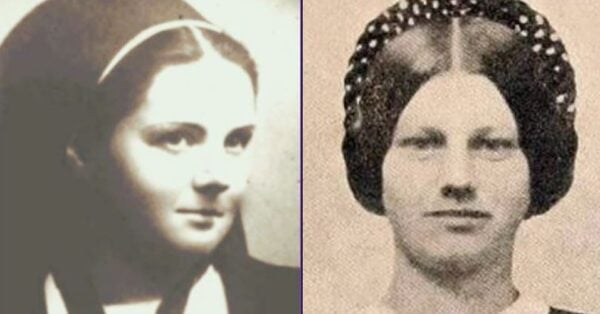
Leon closed our presentation by drawing a parallel between Renee Lemaire (left) and Jennie Wade (right). Jennie was the only civilian killed at Gettysburg. Sadly, 3,000 civilians died in the Battle of the Bulge. Leon deftly segued back to the Partnership, and the possibilities that young people in Gettysburg and Bastogne could connect via the internet, field trips and student exchanges.
Goodwill and Better Friendships
As a Rotarian I try to consider whether my actions “bring goodwill and better friendships.” Thanks to Gettysburg Rotary President Charles Elder, our presentation at their luncheon meeting did just that, as Leon and I were warmly received and new friends were made.
Throughout my short visit to Gettysburg, I experienced exemplary hospitality. My story about three heroic healers in Bastogne resonated with Kristin Webb, director of the Gettysburg Film Commission, who was also enthusiastic about my plan to turn the screenplay I wrote for Angels of Bastogne into a limited series for broadcast.
Dr. Walton Jones, chairman of the Dwight D. Eisenhower Society, looked forward to reading my book and pledged his organization’s support for the Partnership. Under the gaze of a portrait of Eisenhower, Dr. Jones underscored Ike’s connection on several levels, including his leadership of the American army during the Battle of the Bulge, and his retirement in Gettysburg where he hosted multiple world leaders and most assuredly embodied and restated what he said in 1946:
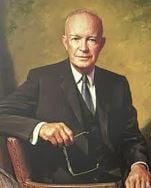
“I hate war as only a soldier who has lived it can, only one who has seen its brutality, its futility, and its stupidity.”
Gone But Not Forgotten
Central to all of my presentations is the gratitude and active remembrance that the French, Belgians, Dutch and Luxembourgers demonstrate year after year by honoring our soldiers buried on their land.
Just as life surprises and offers astonishing coincidences now and again, Rotarian Melissa Kopp-Smith chimed in with her family’s story. Her great uncle Parker E. Prosser was killed in action and buried in the Netherlands American Cemetery.
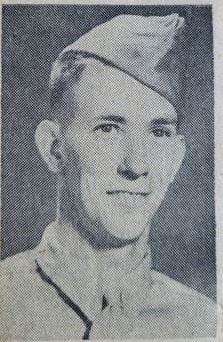
Melissa states that:
“Although Parker’s family could not be there to visit his grave, he was not forgotten. Since his internment, Dutch families have adopted the graves of American soldiers buried at Margraten, caring for them by visiting, placing flowers, and ensuring that the men who gave their lives for freedom continue to be remembered.”
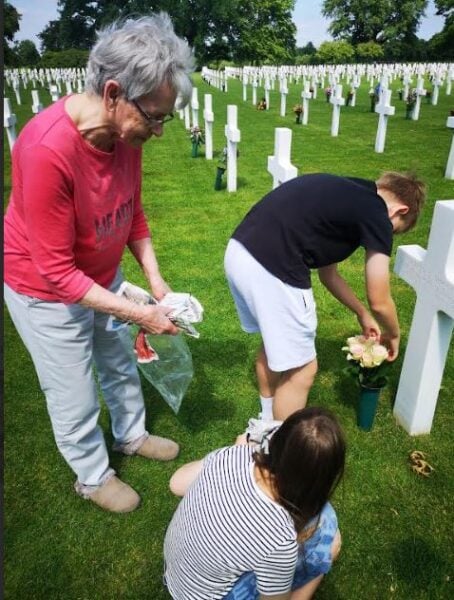
Parker’s grave is cared for throughout the year by three generations of the Senden family living nearby. It is Grandma Senden’s intent that her two grandchildren will carry the torch forward. If it falls from their hands one day, there are hundreds of families on waiting lists all over Europe to take over the privilege of remembering young Americans they never knew.
I cannot say enough about Leon Reed’s initiative to seek common ground between locations that are sacred ground for Americans, even as the scourge of war continues to haunt our world. When will we ever learn? In the meantime, let Abraham Lincoln’s words from 1861 in his first inaugural address give us hope:
“The mystic chords of memory, stretching from every battlefield and patriot grave to every living heart and hearthstone all over this broad land, will yet swell the chorus of the Union, when again touched, as surely they will be, by the better angels of our nature.”
I say let the Partnership proceed and gather steam. It could act as a model for other efforts to link young people worldwide so they can remember, learn from history and build a more peaceful world. What say ye?
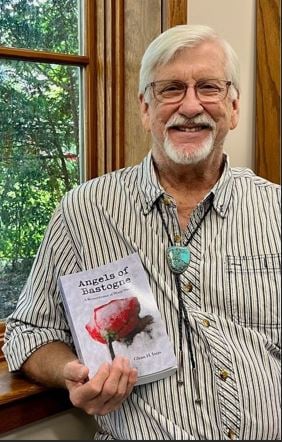
Author of Angels of Bastogne: A Remembrance of World War II