
The double-breasted cormorant (Nannoptrem aurtium) is one of North America’s most prolific waterbirds; it is also one of the most prolific nemeses of area anglers. Current regulations prevent hunters from doing anything but stand by and watch; pending legislation may change that.
Characterized by matte-black plumage, webbed feet, and a hooked bill, the cormorant is not winning any beauty prizes. But put it underwater, and the cormorant is an exceptional swimmer and predator. In the mid-20th century, their numbers plummeted due to exposure to toxins such as DDT. In recent years, their population has rebounded and even surpassed historic numbers, thanks to protection under the Migratory Bird Treaty Act.
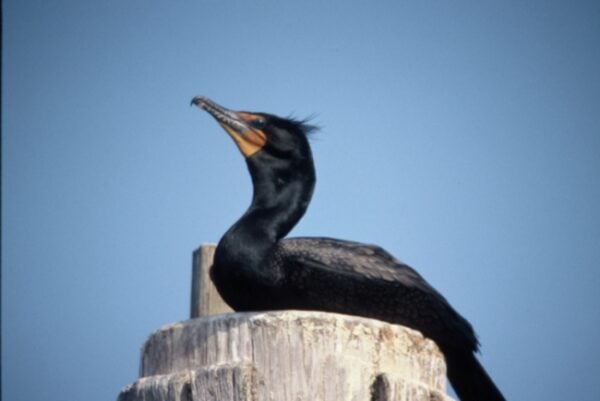
Although this rebound has benefited the species, it has also caused significant conflict along local shorelines, lakes, and rivers, including the Susquehanna River.
Why Anglers Despise the Cormorant
To anglers and commercial aquaculture owners, the cormorant’s resurgence represents an unchecked drain on the fishery. A single adult bird is capable of consuming roughly a pound of fish per day. While a pound per day may not seem like much, when you consider that they are opportunistic hunters and do so in large, coordinated flocks, the math adds up to far more.
Anglers argue that concentrated cormorant flocks decimate prized recreational species, including yellow perch, smallmouth bass, and juvenile walleye. In sensitive tributaries and at stocking release sites, flocks can wipe out localized populations of young fish in a matter of days. Because cormorants cannot target adult fish, the impact is not immediately evident. However, two or three years later, anglers will realize populations have crashed because recruitment has been low.
The impact goes beyond fish numbers and competition with anglers. Cormorants nest in dense rookeries, typically on local islands or shorelines. Their highly acidic excrement destroys trees and local vegetation, altering local habitats and displacing other bird populations such as herons and egrets. Local communities see these “ghost forests as both an eyesore and an ecological red flag.
The Stalemate
Federal regulations not only prevent the public from acting, but they also hamstring state wildlife agencies. Because they fall under the MBTA, killing a cormorant, or even purposely disturbing their rookeries, is a federal crime without a federal depredation permit. In 20220, the U.S. Fish and Wildlife Service established a general permit system allowing states in the Atlantic and Mississippi flyways, including Pennsylvania, to lethally remove coordinated quotas to protect wild fish populations. However, conservation and sportsmen’s organizations claim the system is slowed by bureaucracy and is insufficient to control booming bird numbers.
Opening the Door to Hunting
In response to mounting pressure from sportsmen, conservation organizations, and state fishery managers, federal lawmakers have introduced legislation to establish broader lethal control and, potentially, allow hunting as a management tool. The Responsible Cormorant Management and Control Act, spearheaded by Rep. Tim Walberg and Sen. Ted Cruze & Katie Britt, aims to reconstruct how the USF&W approached population control. Instead of relying on limited emergency permits, which require an extreme situation prior to approval, the legislation would direct USF&W to develop regional population targets, balance cormorant numbers against the viability of other conflicted species and broaden harvest methods.
If approved, broadening harvest methods would allow states to treat the species like ducks and geese. Wildlife managers who believe cormorant populations are excessive and endanger competing species of wildlife or fish populations could develop a recreational hunting framework and submit that plan to USF&W for approval. If approved, hunters would then become part of the management plan in the same manner they are for multiple other game species across America.
Featured Image Credit: Karney, Lee/USFWS. Obtained from the USF&W Service, approved for public domain.
