
Of the many achievements of Thaddeus Stevens, the one he looked back on most fondly was his saving of public education in Pennsylvania in 1835.
Education in Pennsylvania in the early 1830s was truly a nightmare. Schooling was pretty much restricted to those who could pay for it. Provisions existed for the state to pay if a family could prove they were paupers. But who wanted to be a pariah in their community? So between people who thought education was unnecessary and those too proud to accept charity, less than a third of the state’s school-age children received an education, according to the book Thaddeus Stevens in Gettysburg: The Making of an Abolitionist, by Bradley R. Hoch.
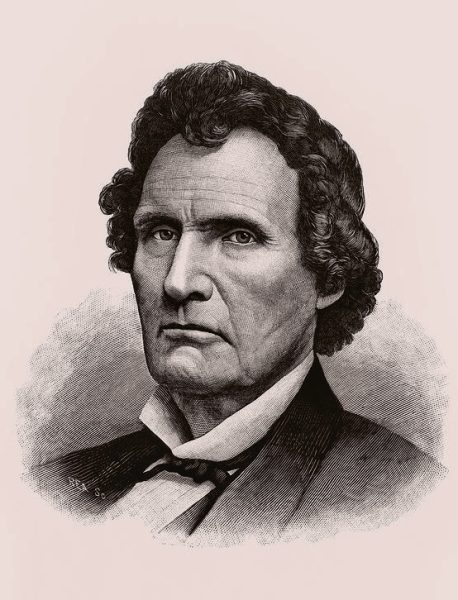
Then on April 1, 1834 Pennsylvania was one of the first states to pass legislation providing schools for every child regardless of wealth. Of course, this also meant higher taxes, and there was an immediate backlash. Many churches were also wary of secular education. This resulted in many people elected in the fall being pledged to repeal the new law.
On March 19, 1835 the Pennsylvania Senate voted to repeal the public school act and then the bill moved over to the state House of Representatives. Stevens, who represented Gettysburg, got up on April 11 and gave one of the most effective speeches of his legislative career.
With both members of the House and Senate listening, Stevens said public education was necessary so that every voter could “direct wisely the Legislatures, the ambassadors, and the Executives of the Nation.” It would also benefit the children of parents who saw their offspring as mere “instruments of gain.”
“This law will be of vast advantage to the offspring of such misers,” Stevens said. “If they are compelled to pay their taxes to support schools, their very meanness will induce them to send their children to them to get the worth of their money.”
He also appealed to the other legislators’ desire for fame. “If you wish to acquire popularity, how often have you been admonished to build not your monuments of brass or marble, but make them of ever-living mind.”
The speech was a hit. It seemingly swayed the House to pass a strong public education act, which was then approved by the Senate that had earlier repealed public education. It was a great triumph for Stevens and he was accorded the title of “Father of Public Education in Pennsylvania,” even though he was actually the savior since he did not introduce the 1834 bill.
This led to many schools in Pennsylvania being named after Stevens, including ones in Chambersburg, New Castle, Williamsport, Pittsburgh, Philadelphia, and Allentown. Even schools in Washington, D.C. and Brooklyn, NY bear his name.
Ironically, there has never been a Gettysburg school named after Stevens even though he represented the area at the time of his famous speech. A 2014 request by the Thaddeus Stevens Society to name the Gettysburg Middle School after Stevens was turned down by the board of the Gettysburg Area School District.
And even though Stevens would go on to achieve great things in the following decades, he considered that speech one of his greatest victories and close to death in 1868 he said: “I shall feel myself abundantly rewarded for all my efforts in behalf of universal education if a single child, educated by the Commonwealth, shall drop a tear of gratitude on my grave.”
