
Within less than six months after the Declaration of Independence, the men who approved it appeared to have made one of the worst bets in history. Their army was thoroughly out-maneuvered and out-fought in Brooklyn and New York City, then was chased the length of New Jersey and into Pennsylvania. As Christmas approached, the British commander issued a triumphal message and returned to the comfort of New York City, leaving a few scattered outposts in southern New Jersey. The rebellion seemed to be all but dead. One short campaign the next spring – if there was even an American army to take the field – should wrap things up.
At this difficult time, the most influential pamphleteer in history, Thomas Paine, whose Common Sense earlier in the year had influenced many to turn toward independence, pled for Americans to stay the course. He wrote The American Crisis, a call to arms that began with the words, “These are the times that try men’s souls: The summer soldier and the sunshine patriot will, in this crisis, shrink from the service of his country; but he that stands it now, deserves the love and thanks of man and woman.”
Washington recognized that he needed a miracle. He decided on a high-risk operation, to attack the Hessian garrison at Trenton, New Jersey, on Christmas night 1776. To do this, Washington’s army had to cross the ice-clogged Delaware River during the worst storm in decades. Then they would approach Trenton by three different paths. This would be hard enough in daylight with disciplined troops but virtually impossible with amateurs, after dark, during a violent storm. But although there were delays, the three columns approached Trenton before dawn and found that the Hessian commander had pulled in his pickets because he was convinced nobody was mad enough to be out in this weather.
The Americans achieved total surprise, opening fire on the sleeping garrison. (The often-repeated rumor that the Hessians were hung over after a day-long carouse is nonsense.) The German commander tried to rally his troops, but it was too late. With only a handful of losses, Washington’s troops killed or captured more than 500 Hessians – then scuttled back across the Delaware River to safety in Pennsylvania.
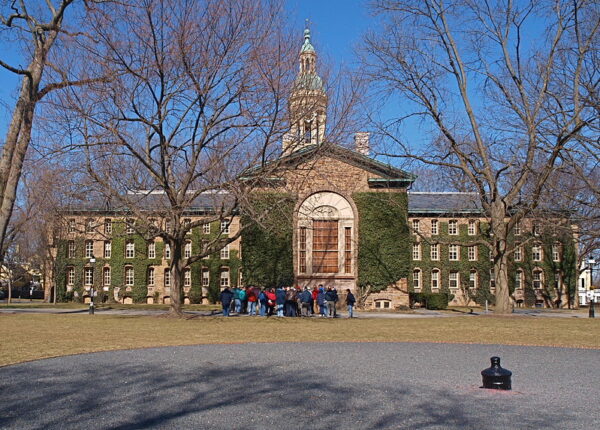
Washington’s victory at Trenton was an important morale boost to the colonies … but didn’t fundamentally change anything. The British still held a strong position in New Jersey. Then Washington learned that a force of militia was still in New Jersey, and he returned to Trenton, daring the British to attack. When Lord Cornwallis approached his “trapped” Army, Washington left a small number behind to keep fires burning, then took the rest of his army on a back roads march to Princeton, where he attacked an English rear guard.
This second victory electrified the colonies and restored faith in the Revolution. It was also the beginning of Washington’s growth – and reputation – as a leader. In frustration, Cornwallis termed him “Washington the Fox,” a nickname that delighted his soldiers. Washington’s behavior during the battle also impressed American and British soldiers alike: he rode out between the lines and, sitting tall on his horse, stared placidly at the British –and wasn’t struck by a bullet. The first possible explanation – the British were too intimidated to shoot – was pretty good, but the other – he was protected by God’s Providence – suggested that the entire rebellion was being protected by Divine Providence.
After Princeton, the militia came out and harassed the other Hessian garrisons. No patrol or foraging party was safe beyond sight of the fort. The British were forced to pull back to New York City, abandoning their gains from the fall campaign. Washington was learning how to even the odds against the British. The times had tried Washington’s soul, and he had indeed earned the love and thanks of man and woman.
