
by Whitney Downard, Pennsylvania Capital-Star
Thousands of small businesses across the commonwealth paid billions of dollars under President Donald Trump’s “Liberation Day” tariffs, which the U.S. Supreme Court struck down in a decision late last week.
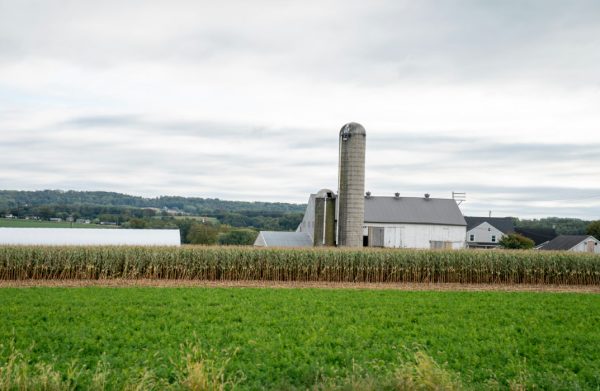
(Photo by Jessica Kourkounis for the Pennsylvania Capital-Star)
Lancaster County glass and ceramic decorator Walt Rowen said he believed that the court “got it right,” but noted there were still a lot of unanswered questions.
“I think we’re still in an era of great uncertainty with tariffs,” said Rowen, a third-generation owner of Susquehanna Glass Company in Columbia. “Not only if there’ll be a rebate but also, ‘How do you plan going forward?’”
Rowen cited the possibility of new tariffs, which Trump said he would impose shortly after the ruling. On Friday, Trump said a universal 15% tariff would fall under a provision of the Trade Act of 1974, rather than the now-struck authority under the International Emergency Economic Powers Act.
The court decision holds that Congress alone has the power to tax, though Republican members have declined to roll back the tariffs and are working to codify them. Axios reports that $126 billion has been paid by Americans since the tariffs were imposed, including a $4 billion cost for Pennsylvanians.
The nation’s highest court did not address how, or if, any of that collected money will be returned.
Rowen said he didn’t believe there had been a good justification for the tariffs or whether they had an economic benefit. He said purchasers paid the extra cost, rather than the impacted countries.
Higher prices added to economic stress this last Christmas, he said, depressing sales “that affects businesses like mine.”
“This is no way to run a worldwide economy,” said Rowen. “It’s just insanity.”
Tariffs impacted small businesses, farmers
Business organizations, like the U.S. Chamber of Commerce, have panned the tariffs, saying they “raise prices for consumers and businesses and harm economic growth.” The chamber encourages free trade.
The glassware purchased by Rowen for decorating comes from American companies, but the ceramic mugs or metal tumblers do not. Purchasing a mug, for example, used to cost $2 but now might cost as much as $2.50 — meaning a decorated mug price might go up from $10 to $12.
“It’s definitely increased our prices because we work on tight margins. We can’t just absorb it,” said Rowen.
More than stock, the fast-changing tariff environment has also impacted client ordering, he added. One company that traditionally orders ornaments carved with children’s names and dates delayed their usual summertime order to see what would happen. That hold up made it more difficult for Rowen to predict staffing.
“Everyone gets affected negatively with so much uncertainty,” said Rowen.
The Liberty Justice Center brought the case before the U.S. Supreme Court on behalf of small businesses, including Erie County-based FishUSA, which didn’t respond to a request for comment.
The Texas-based firm said it is now working to secure “relief for affected businesses” on its website, which prompts visitors to share ways that “unconstitutional tariffs (have) impacted your business.”
“The Liberty Justice Center’s work is just beginning. We intend to help small businesses navigate the refund process, including developing a centralized database, information portal, and referral network to connect affected companies with qualified attorneys to pursue potential refund claims,” said Sara Albrecht, the firm’s chair, in a statement.
Notably, the tariff rate and list of impacted countries has shifted several times, adding to the market chaos.
The Trump administration sent $12 billion to farmers in one-time payments to smooth out such economic disruptions, specifically for those growing soybeans and corn. China, in particular, has stopped purchasing such crops from American growers — while tariffs have increased prices for machinery and fertilizer.
American Farm Bureau Federation President Zippy Duvall thanked the administration for payments, but pushed for “open and fair markets” to “rebuild the farm economy.”
“Unfortunately, trade disruptions and declining prices for agricultural goods created additional hardships for farmers who came into 2025 already dealing with crippling inflation and declining farm prices,” said Duvall. “With supply costs already at or near record highs, we strongly encourage the president to avoid using any other available authorities to impose tariffs on agricultural inputs that would further increase costs. America’s farmers and ranchers need stability to ensure families across America can put food on their tables.”
We don’t have a paywall because we want to make sure everyone can access the information they need. You make it possible for us to continue to provide statewide reporting to your fellow Pennsylvanians who might not be in a financial position to give.
Can you chip in now with a one-time gift of $25, $50, or $100? How about a monthly contribution of $10, $20 or $50? Any donation is tax deductible.
Your gift will help us continue to break down how policy decisions in Harrisburg and Washington D.C. impact you and your community.
Thank you for supporting the Capital-Star.
SUPPORT
Pennsylvania Capital-Star is part of States Newsroom, a nonprofit news network supported by grants and a coalition of donors as a 501c(3) public charity. Pennsylvania Capital-Star maintains editorial independence. Contact Editor Tim Lambert for questions: info@penncapital-star.com.
