

At the time of the American Revolution, the situation in the colonies was far from satisfactory for African-Americans, free or enslaved. Although slavery had never caught hold in the northern colonies as it did in the south, the institution was legal everywhere at the start of the Revolution. The American Revolution gave enslaved African Americans unprecedented opportunities to escape from slavery by serving in the British or Continental armies. Others took advantage of the chaos to run away and forge new lives. When the American Revolution began, approximately 450,000 people were enslaved in the thirteen colonies. Some estimates claim that as many as 80,000 to 100,000 of these escaped to the British lines. Black Americans served in every campaign of the war, in the army and the navy, in integrated and segregated units
Crispus Attucks, a black-Indian escaped slave who was killed during the Boston Massacre, is often considered the first casualty of the American Revolution. Black men served in the American armies from Lexington to Yorktown. As was the case in later wars, they believed their loyal service would help improve their lot after the war. And, for some enslaved men who earned their freedom through military service, the plan was successful.
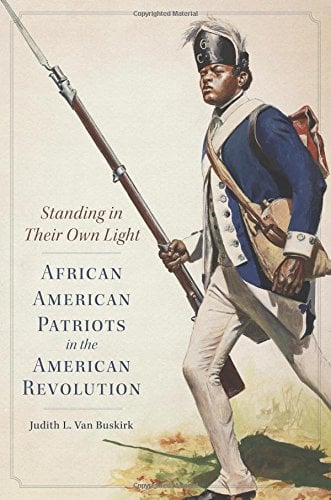
In April 1775, black men responded to the crisis and fought at Lexington and Concord. Prince Estabrook was wounded on the first day of fighting. Black men also served at Bunker Hill and, besides serving in the line, also served as guides, messengers, and spies.
Even states that were unenthusiastic about enlisting black men recognized the importance of willing volunteers in a time when the constant quotas were hard to fill. George Washington authorized enlistment of free black men in 1776 and Congress expanded this to all blacks, free and slave, in 1777. Many northern states promised freedom to those who served in the Continental Army. At the 1781 Siege of Yorktown, a German officer serving with Cornwallis estimated about one-quarter of the American army to be Black men.
The most famous black unit was the 1st Rhode Island Regiment, also known as the “Black Regiment.” It was authorized in 1778 when the state legislature, facing chronic troop shortages, authorized recruitment of black troops on the basis of emancipation after service. Its ranks were largely composed of African American and Indigenous soldiers. It served in the 1778 Battle of Rhode Island after only about six weeks of training, where it held a vital defensive position and held off multiple Hessian attacks. In 1781, the regiment was consolidated with the 2nd Rhode Island and marched to Yorktown, where it participated in the assault force that captured British Redoubts 9 and 10 and participated in the surrender ceremony.
Many other black soldiers participated in fully integrated regiments where white and black soldiers fought, drilled, marched, ate, and slept together.
Seafaring occupations had always provided more opportunities for blacks and thousands of Black sailors, both free and enslaved, served in the Continental Navy, state navies, and aboard privateers during the Revolutionary War. Naval forces were more integrated and accepting of Black recruits than the army. They served in crucial roles, including gunners, carpenters, and expert pilots. One, James Fortin, served as a privateer during the war and after the war established a successful sail-making business and became a leading abolitionist. Caesar Tarrant, an enslaved man who served in the Virginia State Navy, was granted his freedom in 1789 for his dedicated service. But Captain Mark Starlin, a skilled sailor and pilot who commanded Patriot vessels, was re-enslaved after the end of the war.
The sturdy service of African Americans was one primary reason why New England states moved promptly to end slavery, followed shortly after by other northern states.
In every war until WWII, black leaders believed that their postwar condition might improve if they demonstrated that black men were brave, could be good soldiers, and were willing to die for their country. Until President Truman’s 1947 desegregation order, this assumption never was correct. Black soldiers never again served on as nearly equal basis until the Korean War.
Next week: Black loyalists

Outstanding. This history should be read by all Americans. Prejudice for any reason has NO place in our society. I am so pleased to see the Black owned civil war residence is being restored.