

The thinking of the Americans debating independence in 1776 was heavily influenced by writers of the Enlightenment. The Enlightenment was a late 17th-18th century European intellectual movement that rejected traditional authority and religious dogma, instead applying reason, empirical evidence, and the scientific method to society. Three core beliefs were: Natural Rights, Separation of Powers, and Religious Tolerance and Free Speech.
Enlightenment thinkers directly influenced the ideas behind (and even the specific words of) our Declaration of Independence, Constitution, and Bill of Rights and are responsible for many of the ideas that underlie modern politics and society. Both the traditional conservative and liberal political philosophies, as traditionally understood by Americans, derive from Enlightenment thinking.
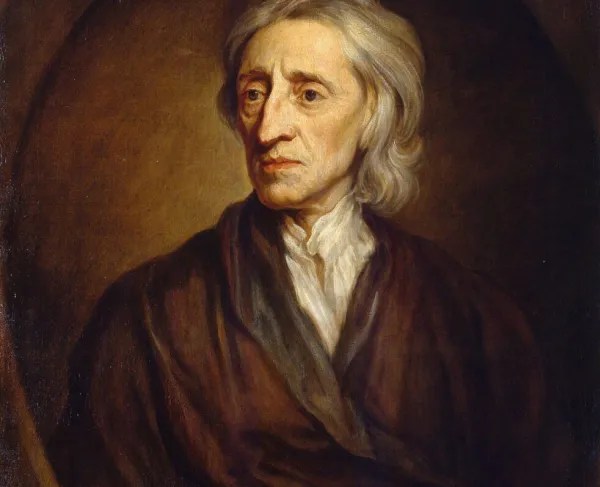
The social contract was a key Enlightenment idea. The theory was most prominently developed by three key political philosophers, each offering a different version of and rationale for the agreement.
Thomas Hobbes argued in Leviathan (published in 1651) that humans live in a chaotic “state of nature” defined by violence and fear. To survive, people must mutually agree to surrender their freedom to an absolute sovereign in exchange for security and the prevention of chaos.
John Locke asserted in his Two Treatises of Government (1689) that individuals are naturally free and equal and possess inalienable natural rights, including life, liberty, and property. He argued that government is formed to protect these rights and that any subjection to political authority requires personal consent. If a sovereign abuses this power, the social contract is broken and citizens have a justified right to rebel. These words strongly influenced Thomas Jefferson, who wrote that governments are instituted among men, “deriving their just powers from the consent of the governed.”
Jean-Jacques Rousseau proposed in The Social Contract (1762), that true freedom is not the absence of rules, but self-governance. He argued citizens should obey the “general will”—a collective agreement aimed at the common good. Rousseau supported popular sovereignty, the idea that legitimate political authority comes from the people rather than divinely appointed monarchs.
Adam Smith argued that individuals should have the freedom to pursue their own self-interest without coercion from the state or monarchs and that a natural social order emerges when such action is taken within a free market. The “invisible hand” guides resources to where they are most valued, ensuring societal prosperity without the need for heavy-handed government plans. He is considered a proponent of a laissez faire economic philosophy; his ideas, including free trade, undercut the Mercantilist philosophy that had prevailed for the previous 100+ years.
The Baron de Montesquieu heavily influenced James Madison’s thinking about the structure of government when he drafted the Constitution. Montesquieu argued that the separation of powers was the only way to protect individual liberties and prevent tyranny. He advocated the division of governmental authority into three independent branches: the legislative (makes laws), executive (enforces laws), and judicial (interprets laws). He also proposed a system of checks and balances to allow each branch to limit and check each other’s powers, ensuring no single individual or group could seize absolute control.
He was a strong advocate for individual liberties, the rule of law, fair trials, the abolition of slavery, and religious tolerance. Like Smith, Montesquieu also believed that international commerce and trade promoted peace, tolerance, and justice between nations.
Voltaire’s ideas had a particularly strong influence on our Bill of Rights.
Reason and Empiricism: Like other Enlightenment writers, Voltaire viewed the scientific method and empirical evidence as the only adequate tools for understanding the world. He introduced the ideas of English thinkers like Isaac Newton and John Locke to France.
Freedom of Speech and Press and Religious Toleration: Foreshadowing our First Amendment, he advocated for the right to free expression and for the toleration of all religions by government and society. He condemned the abuses of traditional religion, particularly the Catholic Church in France, which he denounced as corrupt and intolerant.
Separation of Church and State: Voltaire stated that secular governance was necessary to prevent tyranny and persecution. He argued that government and religious institutions must remain separate and that religion should never dictate state policy.
