
As an Irishman who has lived in the United States, I am constantly looking out for examples of how the two countries are linked. There are many.
Interestingly, my research has revealed that Adams County is linked with the County of Armagh in Ireland through both counties’ mutual association with apples.
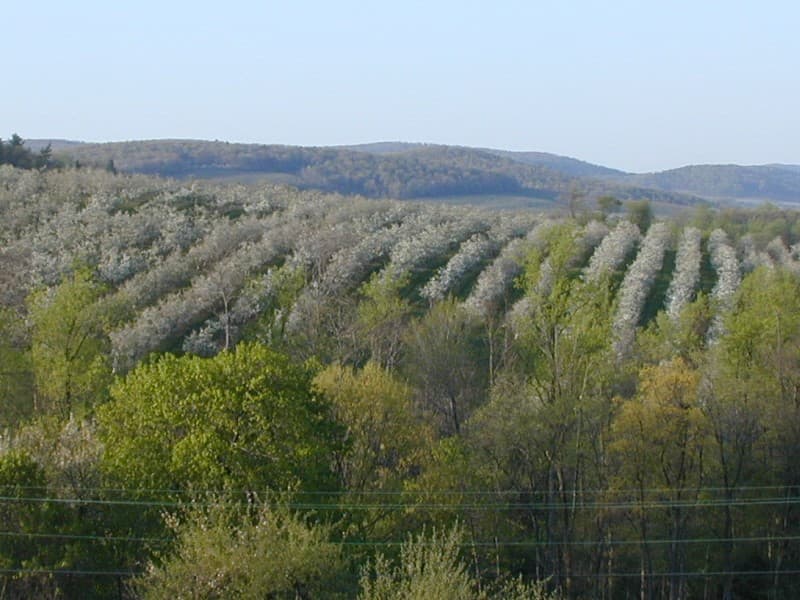
Adams County has its Apple Museum and its Apple Festival, while Armagh is known as the ‘Orchard of Ireland.’ It is the home of the famous Bramley Apple, green and sweet and particularly suited for boiling. The Bramley is so renowned that it has been given special protected status by the European Union, a status that locals refer to with pride.
A little about Armagh for readers. It is one of the six counties of Northern Ireland in the north-eastern part of the island. Its most famous former resident was St. Patrick who brought Christianity to Ireland in the fifth century AD and whose bishopric/diocese was Armagh.
St. Patrick is said to have rid Ireland of snakes and may have used his power too to endow his adopted county with abundant apple orchards. Apples are the county’s most notable agricultural product. With its own thriving apple industry, Adams County has its own fruitful and abundant Garden of Eden and perhaps too its own ‘Adam’s Apple.’
In recent times, County Armagh has had notable residents such as the religious and political leader, the Rev. Ian Paisley, Tommy Makem of the folk group Makem and Clancy, and David Trimble, joint architect of the Good Friday Agreement of 1998.
Within the county are such places as Armagh, Portadown, Lurgan, Crossmaglen and Keady. All of these places would have featured in the international news during the years of the Troubles (1968-1998), but which ended thankfully with the forging of the Good Friday Agreement.
Apples as the currency of international amity and dialogue? Could Adams County and Armagh justify a twinning arrangement across the pond? No better example than the wholesome and health-inducing apple to ignite a mutual arrangement of accord across the Atlantic. These are fraught and confusing times in trans-Atlantic relations. Could it be the dear old apple to come to the rescue as the fitting instrument of international harmony?
