

When Washington became president, there was no guidebook on how to be President, no guidance on how he worked with Congress. There were words in the Constitution, but they needed action to give them meaning. The Constitution and the Federalist Papers defined the authorities of Congress and the President in general terms and defined the restrictions on the President’s authority in great detail. But what did it mean? What did “advice and consent” really mean? Was the veto to be used for any act of Congress the President didn’t like? Or was it to be used sparingly?
Briefly stated, was the President a potential tyrant? Or a figurehead? Or something in between?
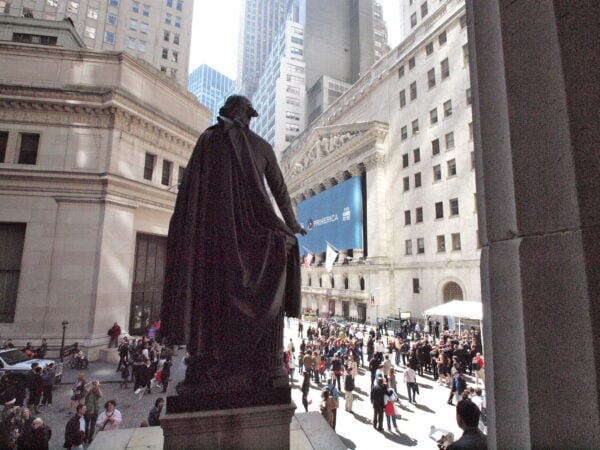
George Washington brought these constitutional requirements to life and set the precedents that were followed by most of his successors. The president is the first citizen. He isn’t “Your Majesty;” it’s “Mr. President.”
He set the precedent of an active chief executive and commander in chief. He appointed well qualified assistants, the original “team of rivals,” and he delegated authority to them. He met with them as a group (the Cabinet) and listened to their advice. He took the field in 1794, commanding the army that suppressed the Whiskey Rebellion. He forcefully defended the position of the federal government but exercised mercy to the rebels.
But he respected the Article I branch as well. He submitted to the advice and consent requirement, acknowledged that the power to declare war rested with Congress, and accepted the legislation submitted by Congress, using the veto only twice.
His departure from the presidency may have been his foremost service. In his Farewell Address, first published in September 1796, he wrote, “The period for a new election of a citizen to administer the executive government of the United States being not far distant … it appears to me proper … that I should now apprise you of the resolution I have formed, to decline being considered among the number of those out of whom a choice is to be made.”
The example of the peaceful transfer of power and his decision that the presidency was not a position with lifetime tenure in office was almost unprecedented: only one Roman emperor retired in 500-plus years. In retiring, Washington established the two-term tradition, which was only ignored twice: by Teddy Roosevelt’s 3rd party candidacy in 1912 and by FDR in 1940 and 1944.
He also determined that the President was the President of the entire country, not one faction or region. He set the example of presidential behavior that most of his successors followed: decorum, piety, dignity. Finally, the president was part of the political hurly-burly, but a bit above it all.
Since Washington, a wide variety of men have served as president, from the well-educated and cultured (Jefferson, Madison, Buchanan, Wilson, FDR, JFK) to lifetime politicians (van Buren, Cleveland, Truman, Nixon, LBJ, Clinton, Biden), to accidental presidents (Tyler, Fillmore, two Johnsons, Arthur, Teddy Roosevelt, Coolidge, Truman, Ford), to military heroes (Jackson, Harrison, Taylor, Grant, Eisenhower, etc.) to media personalities (Harding, Reagan, Trump), to dark horse outsiders (Polk, Pierce, Lincoln, Carter, Trump) to idealistic reformers (Teddy Roosevelt, Hoover, Carter, Obama). Yet among these all, the vast majority viewed the office with awe and adopted many of the precedents Washington set.
Washington’s Legacy. George Washington was an unlikely champion of democracy. Stiff, reserved, and ambitious for land and a place in society, nevertheless he came to understand that his importance lay not in his accumulation of power, but rather in his willingness to walk away from it. He was offered complete, dictatorial power several times, but showed that he had no desire to be Caesar but instead drew his inspiration from Cincinnatus, the Roman leader who left his plow to assume dictatorial power in an emergency — and relinquished that power and returned to his fields when the emergency passed.
For example, after his Christmas 1776 victory at Trenton, Congress granted total powers to Washington. He replied, “Instead of thinking myself free’d from all civil Obligations, by this mark of their Confidence, I shall constantly bear in Mind, that as the Sword was the last Resort for the preservation of our Liberties, so it ought to be the first thing laid aside, when those Liberties are firmly established.”
In March 1783, he stared down a group of his officers who were threatening to march on Congress to demand back pay. The “Newburgh Conspiracy” was the closest the young country came to being a country dominated by the military.
Again, on November 25, 1783, Washington entered New York City after the British army evacuated. But this was no Roman triumph where the public hailed the conquering hero: Washington rode next to Gov. Clinton to show his deference to civilian authority: two public officials entering the city to make sure all was well and to restore civil government.
He made an even more dramatic gesture a month later, when he appeared before Congress to surrender his commission. In a carefully scripted ceremony, Washington reported that he had accomplished the mission Congress had given him (defeat the British) and requested permission to step down and return home. “Having now finished the work assigned me, I retire from the great theatre of Action; and bidding an Affectionate farewell to this August body under whose orders I have so long acted, I here offer my Commission and take my leave of all the employments of public life.”
But his departure from the presidency may have been his foremost service. He wrote, “The period for a new election of a citizen to administer the executive government of the United States being not far distant … it appears to me proper … that I should now apprise you of the resolution I have formed, to decline being considered among the number of those out of whom a choice is to be made.”
The example of the peaceful transfer of power and his decision that the presidency was not a position with lifetime tenure in office was almost unprecedented: only one Roman emperor retired in 500-plus years.
