

Following the victory at Yorktown, VA, on October 19, 1781, combat between main armies came to an end. But while peace talks between British and American diplomats began, Washington still found it necessary to hold the army together for nearly two more years until the peace treaty was agreed to. And with no enemy to fight, this proved to be a challenge. Pay and supplies continued to lag, and the Confederation Congress dragged its feet on fulfilling a promise to provide half pay pensions to officers.
On February 8, 1783, a plot began involving many of Washington’s officers and some sympathetic members of Congress. In March 1783, an anonymous letter circulated throughout the army camp at Newburgh, NY, calling for an ultimatum to be sent to Congress demanding their pay. A meeting was called for March 15, the Ides of March, at a building appropriately known as “The Temple of Honor.” General Horatio Gates, a regular thorn in Washington’s side, chaired the meeting.
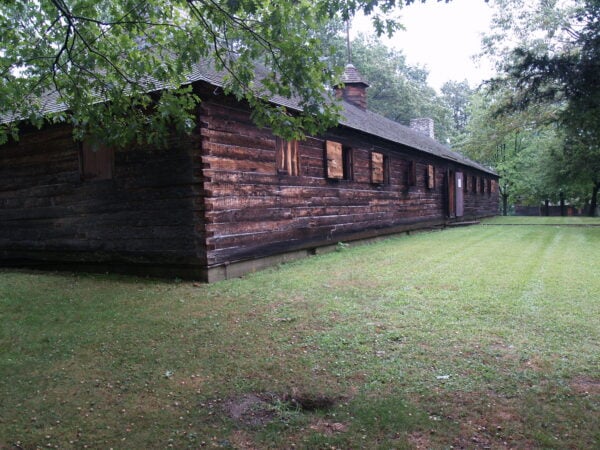
To his officers’ surprise, Washington came to the Newburgh camp and walked into the large wooden temple. While he was sympathetic towards the soldiers that he commanded in the eight-year-long war against the most powerful military in the world, he gave a lengthy speech against their plan to pressure Congress. He was especially critical of the anonymous letter. “…let me conjure you, … as you value your own sacred honor—as you respect the rights of humanity, & as you regard the Military & national character of America, to express your utmost horror & detestation of the Man who wishes, under any specious pretenses, to overturn the liberties of our Country, & who wickedly attempts to open the flood Gates of Civil discord, & deluge our rising Empire in Blood.” But he recognized from the silence and stony stares that his message wasn’t getting through.
As he closed, Washington read a letter from a Virginia member of Congress, which assured the officers of Congress’s good intentions. While reading the letter, Washington took out a pair of reading glasses and said apologetically, “Gentlemen, you will permit me to put on my spectacles, for I have not only grown gray but almost blind in service of my country.” The combination of Washington’s surprise arrival, the speech, and his show of vulnerability, had its effect. The officers remembered their shared sacrifice and some openly wept.
After Washington left the temple, most of the officers supported their commander’s plea for patience and put their faith in the Confederation Congress. Four days later, Congress voted to grant soldiers full pay for five years.
The Newburgh Conspiracy was one of the new nation’s most serious threats. Washington successfully appealed to the patriotism and valor of his officers, but it was, as the Duke of Wellington commented about Waterloo, “the nearest-run thing you ever saw in your life.” Once the military has dictated to Congress, the toothpaste is not put back in the tube. The Newburgh Conspiracy was the closest this nation ever came to being a country where the military dominates the civilian government.
