
Snakes are one of the most feared and hated wild animals, bar maybe sharks. Just the mention of a snake in the area causes people to shiver, search nervously for any sign, and offer unprovoked responses such as “nope rope” or “only good snake is a dead snake”. Much of this fear and hatred is linked to a biblical influence, misunderstanding, or fear that all snakes are venomous. Snakes fill a valuable niche in the natural resource cycle and rarely cause harm to humans.
21 species of snakes call Pennsylvania home, most of which can be found throughout the Commonwealth. Only three of the native species are venomous: the Timber Rattlesnake, the Eastern Copperhead, and the Eastern Massasauga Rattlesnake. The Eastern Massasauga Rattlesnake’s habitat is limited to a very small area near Erie. The other two species, the Timber Rattlesnake & Eastern Copperhead, can both be found on South Mountain.
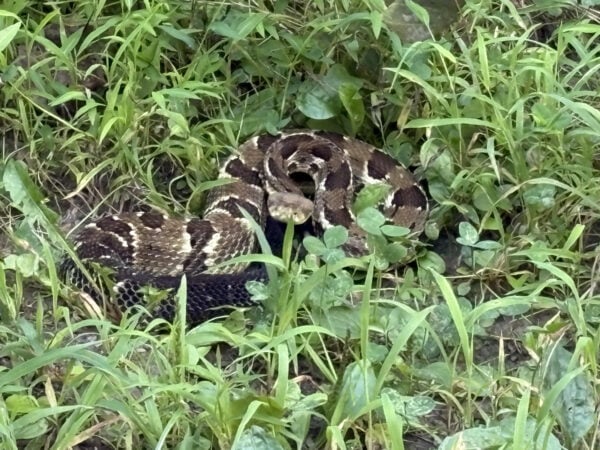
Although both species are experiencing a loss of valuable natural habitat, South Mountain provides a near-perfect home for both. With over 95,000 acres of protected property under the management of DCNR, much of which is woody, rocky, and mountainous. This presents both good news and bad news for the Timber Rattlesnake. The good news is that the once-threatened species has a thriving population outside its historic north-central range. The bad news is that these snakes are isolated from the larger state population, meaning there is less opportunity for an expanded breeding population and a greater risk should this population be affected by illness or a similar threat.
All native snake species are protected under PA law, which imposes strict regulations on catching, taking, keeping, or killing each species. Timber Rattlesnakes receive additional protection – there is a limited season for taking this species, size limits help protect females from capture, and individuals must possess a Venomous Snake Permit.
Due to its limited and isolated population, the South Mountain area is off limits to hunting. The specific area is outlined in the PA Fish & Boat Regulations, but it is roughly bordered by I-81 on the west, I-83 on the east, and the Maryland Border on the south. Regardless of regulations and seasons elsewhere, no Timber Rattlesnakes may be hunted, taken, or possessed while hunting in the area.
If you are interested in viewing either Timber Rattlesnakes or Eastern Copperheads in the South Mountain area, finding them is not as hard as you might think. Although there is no public database showing where den sites or known gathering areas are located, both species spend much of the year in the same or nearby locations.
Rocky outcrops: deep rock crevices, stone ledges, and crumbling rock slopes provide communal den sites & shed locations.
South-facing slopes: attract snakes who need to bask in the sunlight to regulate body temperature.
Forest Edges & leaf litter: natural camouflage allows both species to easily hide on the forest floor, blending with dead leaves, under vines, or beside downed logs.
Old structures, or anywhere rodents may be found: rodents are a major part of a snake’s diet, and controlling them is one of the benefits a healthy snake population provides. This means that snakes will frequently set up ambush points along rodent trails and in structures such as abandoned buildings, stone walls, and wood piles.
Despite what many people may think, traveling in snake habitat and viewing even venomous snakes in the wild can be done safely if you follow a few simple steps.
Never try to touch a snake without proper training and equipment.
Be aware of your surroundings and wear proper footwear. Most snake bites in PA are the result of accidentally stepping on an unseen snake.
Follow standard hiking safety procedures. The rocky, mountainous terrain can easily result in injury. The hot temperatures of summer can quickly cause dehydration.
If you are bitten, do not panic. Bites from either species are rarely fatal but do cause a serious amount of pain. Medical care will be needed so call 911, provide your location, and transport them to the nearest hospital with anti-venom.
Snakes, including our venomous species, are an important part of PA’s natural resources. As with any other species of wildlife, they should be respected, not feared. Without snakes, many areas would experience rodent infestations, and associated diseases would skyrocket. Furthermore, venom from many species is used in valuable medical research.
Featured image caption: Timber rattler.

Can anyone here provide me with a direct email address for Tom Burrell or another Michaux expert? I have a specific South Mountain snake question.